

Pig Earth, 2026
4k film, 30 minutes.
With an original score by Jenny Trinh (Wytchings).
Premiering April 11th at Syrup Contemporary, Sydney, Australia.
Pig Earth is an exhibition of new work by Jake Starr curated by Sarah Hibbs, featuring installation, video, sculpture, and print.
The exhibition traces a sequence of conditions through which consciousness emerges, organises, and ultimately fractures under its own weight. It follows the slow organisation of mind from instinct into structure, from structure into consciousness, only for this awareness to rupture, turning back upon the organism that hosts it.
The film moves between states that are not separate but precarious phases within the same continuum. The domesticated and the feral, the fed and the feeding, the creature that eats and the creature that knows it eats. The eater, the rats, Pinocchio - figures each occupying a different register of being, yet all wading through the same field of disorder, where systems collapse and distinctions lose their integrity.
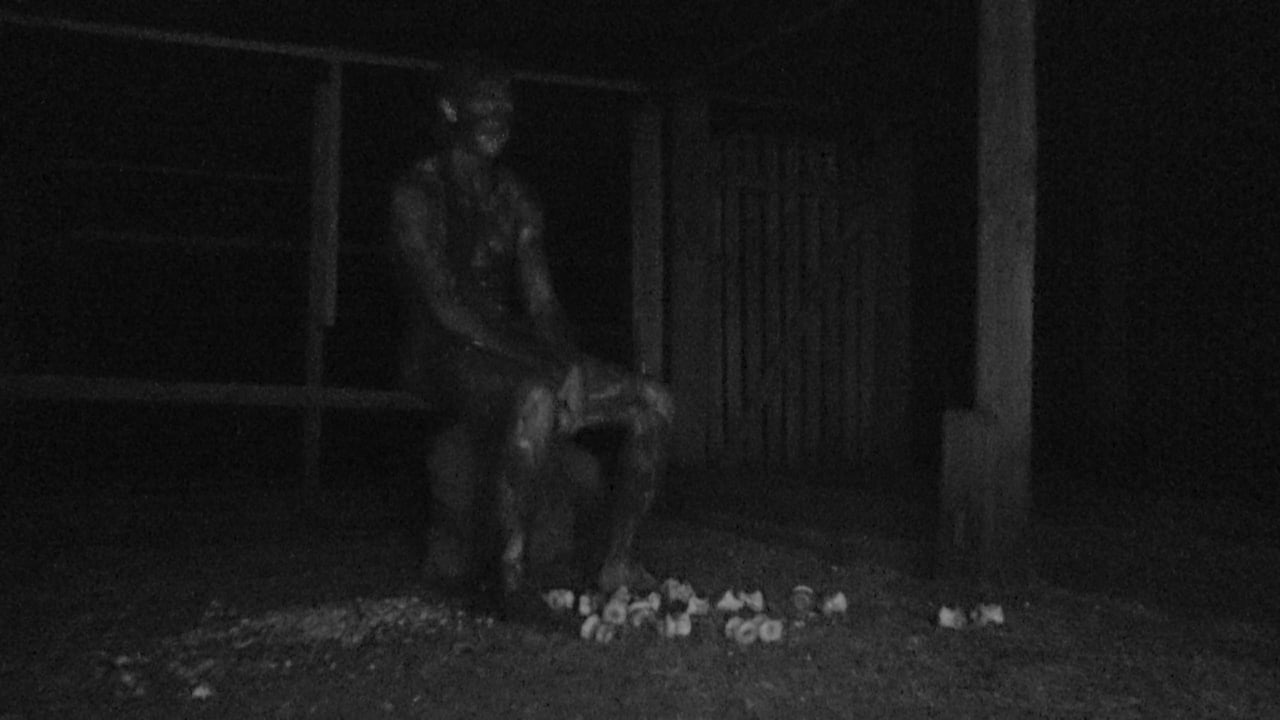
Shot entirely in infrared, the film exists in a visual field invisible to the naked human eye. It abandons colour, the primary ordering system of human sight, and replaces it with unstable gradients of heat and reflectance. In this register, vision becomes a record of entropy. What appears is not the world as structured for human comprehension but as it is registered by systems indifferent to meaning. Skin, soil, animal and object are rendered within the same spectral field, eroding the visual hierarchy that typically separates human from non-human.The camera does not only frame a process of disorder but operates as an agent within the rupture, accelerating the breakdown of perceptual order. What emerges is not a narrative of progress but of complication.
The collapse of perceptual order finds its analogue not just in how the world is seen but in how it is inhabited. The animal does not ask what it is to be. The animal does not divide itself from its own condition. It lives within the immediacy of its drives, intact within its own opacity. Consciousness interrupts this condition. It introduces a fracture - the ability to know oneself, and in knowing, to separate.
From this fracture, a question proliferates, whether consciousness is an adaptation or an aberration. Whether it secures survival or undermines it. Whether the reflective mind is a refinement of life, or a deviation from it - a detour that leads not outward into greater integration, but inward into recursive instability.
If evolution tends toward efficiency, then consciousness appears excessive. If it tends toward survival, then consciousness appears compromised. The conscious animal becomes the animal that hesitates, the animal that suffers its own awareness, the animal for whom existence is no longer given but must be continually reckoned with.
In this sense, consciousness may be less a culmination than a misstep: not the enlightenment of the organism, but its undoing.


The Trouble With Being Born

In Apprehension How Like A God

The Strange Luxury Of Pity

And It Said, Cursed Is The

And It Said, You Will Crawl On
Here is a place that is nought but dust and the wind which stirs it. Here in this place there is no life. Here in this place there is no life but that which clings to the dust upon the wind which stirs it. That which clings to the dust upon the wind which stirs it does not know why it clings to the dust. That which does not know why it clings to the dust clings without urge to know. That with no urge to know why it clings to such dust lives in innocence. What lives in innocence is innocent to the dust. What lives in innocence is innocent to history. What lives in innocence is innocent to itself. That which is innocent to itself does not know of itself. That which does not know of itself is innocent. What is innocent clings to the dust upon the wind which stirs it.
What is guilty clings to the dust upon the wind which stirs it. That which is guilty clings with an urge to know why it clings to such dust. That with an urge to know why it clings to such dust lives in guilt. What lives in guilt is guilty to the dust. What lives in guilt is guilty to history. What lives in guilt is guilty to itself. That which is guilty to itself, knows of itself. That which knows of itself is guilty. What is guilty wishes to not be guilty. What is guilty wishes to cling to the dust upon the wind which stirs it without an urge to know why it clings to such dust. What is guilty wishes not to know itself. What is guilty wishes to live in innocence. That which knows itself can only live in guilt. That which lives in guilt can only cling to the dust upon the wind which stirs it. That which lives in guilt can only cling to an anguish in not knowing why it clings to such dust. Here in this place there is no life. Here is a place that is nought but dust and the wind which stirs it.


Construction documentation by Aldi Exandro Difinubun